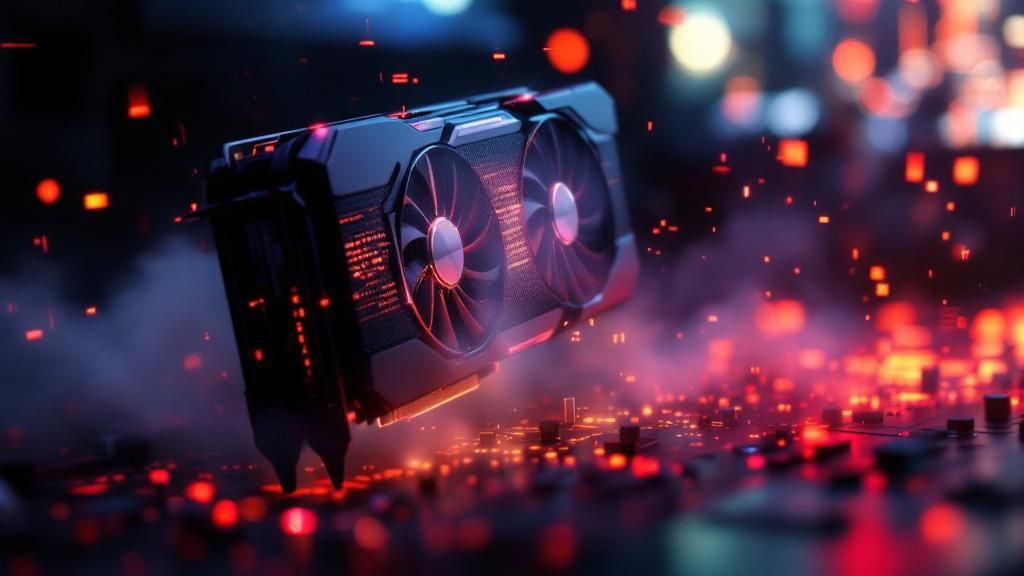

The gaming industry is undergoing a revolutionary transformation as next-generation graphics processors shatters performance thresholds previously thought insurmountable. For discerning gamers demanding maximum frame rates and exceptional image quality, this innovation represents a watershed moment. This article explores the innovative architecture and technical expertise behind these new-generation processors, examining how they deliver extraordinary performance gains that reshape what’s feasible in contemporary gaming. Find out what renders these GPUs vital for gamers wanting the best gaming performance.
Revolutionary Architecture and Core Upgrades
The newest generation of graphics cards introduces a radically transformed architecture that enhances computational performance whilst minimising power consumption. Engineers have deployed sophisticated fabrication methods that enable significantly higher transistor densities, allowing for higher core configurations and enhanced memory bandwidth. These architectural innovations support simultaneous handling of intricate rendering workloads with remarkable performance, directly translating to frame rates that were earlier impossible at peak visual configurations. The optimised architectural approach focuses on temperature regulation and power optimisation, ensuring reliable functionality during lengthy gaming marathons without excessive heat generation or electrical demand.
Core improvements extend beyond raw processing power, encompassing smart cache architecture and refined command structures precisely designed for modern gaming workloads. The enhanced memory hierarchy dramatically reduces latency, allowing quicker data retrieval and manipulation during intensive graphics processing. Manufacturers have additionally installed bespoke processing modules focused on ray tracing and artificial intelligence acceleration, optimising these resource-heavy features. These cumulative improvements operate together to generate performance boosts that surpass the total of their separate elements, setting a new performance benchmark that demands recognition from serious gamers worldwide.
Operational Standards and Actual Gaming Results
Independent testing laboratories have performed comprehensive performance testing of the latest graphics card generation, revealing remarkable performance improvements throughout the range. In resource-intensive games such as Cyberpunk 2077 and Alan Wake 2, the latest design demonstrates frame rate increases exceeding 40 per cent compared to the prior generation. These results confirm that the technical improvements deliver tangible, measurable benefits for gamers seeking better performance at highest graphics quality and greater resolution support.
Real-world gaming scenarios additionally support the benchmark findings, with players reporting remarkably fluid gameplay at 4K resolution with ray tracing set to maximum. Frame rates consistently remain above 100 fps in competitive titles, whilst preserving visual fidelity at the top-tier quality presets. The improved memory bandwidth and optimised rendering pipeline ensure that these performance improvements remain consistent during extended gaming sessions, delivering the dependability and stability that demanding users demand from high-end hardware purchases.
Advanced Cooling Solutions and Power Efficiency
Modern graphics cards produce considerable thermal energy during demanding gameplay periods, necessitating advanced cooling systems. Manufacturers have engineered innovative thermal solutions featuring several heat conduits, sophisticated fin configurations, and premium thermal compounds that efficiently dissipate heat away from essential parts. These advancements ensure ideal thermal conditions, prolonging GPU longevity whilst maintaining consistent performance. Liquid-based cooling systems are now available for enthusiasts pursuing superior heat control, offering enhanced cooling efficiency compared to conventional air cooling solutions.
Power efficiency has emerged as critical in next-generation graphics card design, balancing raw performance with sustainable energy consumption. These cards employ advanced power management infrastructure and sophisticated voltage control to eliminate inefficient energy dissipation. Dynamic power scaling technologies dynamically modify clock speeds and voltage based on workload demands, lowering power draw during lighter workloads. This carefully considered design strategy not only lowers operational costs for gamers but also lessens environmental burden, making high-performance gaming more sustainable than ever before.
Safeguarding Your Gaming Setup
Investing in the newest graphics card technology guarantees your gaming rig stays competitive for the foreseeable future. Modern GPUs are designed with future-proofing in mind, supporting emerging standards and APIs that studios will implement throughout the next generation of games. By selecting a card with generous memory capacity and cutting-edge architecture, you’re essentially investing in durability alongside performance. These cards run today’s demanding titles effortlessly whilst staying capable of handling tomorrow’s graphically intensive releases without requiring immediate replacement.
Consider your gaming needs when selecting hardware, as this establishes the appropriate investment level. Enthusiasts aiming for 4K gaming at maximum settings demand more robust specifications than those content with 1440p performance. The strength of current-generation cards exists in their scalability—they gracefully handle both present-day requirements and anticipated future demands. Combining a capable graphics card with proper power supply and thermal management creates a platform capable of accommodating technological advancements for several years, ultimately delivering excellent value and gaming satisfaction.
